

swkc.over-blog.com/
16 Février 2021

If you are Ubuntu's fan and want to try out its latest Focal Fossa 20.04 LTS Linux distro, then you can do it using a bootable USB drive created on Windows 10/7/8…
Well, the Ubuntu 20.04 is here and we can try it out before the actual launch slated at the end of April 2020. The focal fossa bootable ISO file is available to download which we can try out directly on Virtual Machines; however, those want to install or test it Live on PC they can create a bootable drive using software like Rufus.
Bootable USB is a USB drive that is used to boot up a computer or laptop for installation on an operating system. Unlike Windows, Linux distributions require a third-party tool to create a bootable USB. It is particularly handy with modern PCs which have done away with the old DVD-drives. Launch Rufus and Insert your USB stick in Windows system In the Rufus main window, from the Drive drop down, select your USB stick drive. In the Boot Selection drop-down, select Disk Or ISO Image and then click the Select button. Choose the ISO file of Ubuntu/Linux which you have downloaded. As is the case with your computer, you can dual-boot multiple live Linux desktops from a single USB stick. Read the full article: The 5 Best Linux Distros to Install on a USB Stick Tags Data Recovery, Linux, Linux Distro, Meta: HAIL, Operating Systems, USB Drive.
Although it is very simple to create a bootable drive using Rufus, still, those are new to it they can see the below-given steps.
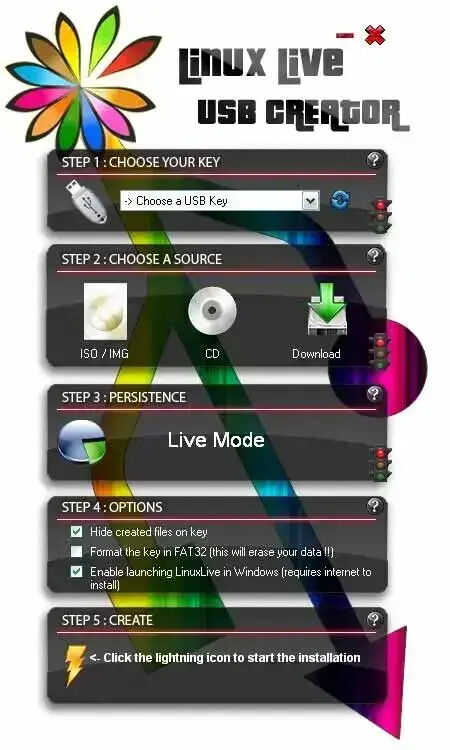
In this article, I will guide you to dual boot Ubuntu 20.04 with Windows 10 by creating a bootable USB. This is an in-depth article, so sit back and read every step to install Ubuntu Linux. Use your Linux ISO image file to create a bootable USB installation media. You can use any software like Unetbootin, Gnome Disk Utility, Yumi Multi Boot, xboot, Live USB Creator, etc. To create bootable USB with the help of ISO image file. Alternatively, you can use DVD disk by writing that ISO image to it (but that is the old school method).
If you already have downloaded Ubuntu 20.04 then simply move to next step and if not then here is the link to get its ISO file.
So, Rufus is the nifty software for creating Linux bootable USB drive on Windows 10 or 7. Go to Rufus.ie get this portable software, yes we don't need to install it just download the setup, double click on it and you are good to go.
As Rufus gets opened you will see a couple of options, however, only two things which we need to be set: First, select the USB drive attached to your system that you want to use and second is the selection of ISO file of Focal Fossa. After that simply click on the start button. For more clear idea see the below screenshot.
Set Rufus to create Ubuntu 20.04 ISO bootable drive
Wait for a few minutes, once the USB drive becomes bootable the Rufus will show that.
Now, eject and insert the Ubuntu 20.04 bootable USB drive to the system where you want to LIVE test or install it. After that boot the PC with the same attached drive.
Also, See
Have you ever tried using a live USB drive to run Linux OS? It is a simple and easy way to learn how Ubuntu works and to become familiar with the user interface (UI) and layout. Using a live USB, you can boot up the system, install programs, save items, and make configurations without altering your computer's configuration. However, take note that once you reboot the system, all saved items and changes will be wiped away. This is not a problem if you are just trying out the operating system for one time only. If you want to save your files and settings so that you do not have to start from scratch, you can create a persistent USB drive by installing the OS on it.This article will explain how to run Ubuntu 20.04 from a USB stick. The article will also explain how to install Ubuntu on a USB drive to make the drive persistent. The primary topics covered in this article include the following:
Note: We have performed the procedure discussed in this article on a system running Ubuntu 20.04 LTS.
Follow the steps below to prepare a live USB drive:
1. Download the Ubuntu 20.04 LTS ISO file from the Ubuntu official Downloads page.
2. Insert the USB drive into your system. The USB drive must be a minimum of 4GB.
3. To make a Live USB in your Ubuntu system, open the Startup Disk creator application. If you are using a Windows system, use Rufus, and for macOS, use the Disk utility. In this example, we are working on an Ubuntu system, so we will use the Startup Disk creator application.
To launch the Startup Disk creator, hit the super key on your keyboard and search for the application using the search bar that appears. When the search result appears, click on the Startup Disk creator icon to launch the application. Under the Source disc image(.iso) section in the Startup Disk creator application, click on the Other button to insert the Ubuntu .iso file. The Disk to use section will automatically detect and add your plugged-in USB drive.
4. Click the Make Startup Disk button to start creating a bootable USB drive.
Wait for a little while, and the bootable media will be created. You will see the following message. Click the Quit button to close the notification.
Once you have a bootable USB, you can take it with you anywhere and run the OS from it without installation. However, remember that you cannot store files and data on the USB live image. If you want to save files and data on the USB drive, you will first need to install Ubuntu on the USB and create persistent storage.
Note: If the system you are using already has an OS installed, you should be sure to make a backup of all your data.
If you want to just try out Ubuntu OS without installing it, follow the steps below:
Now, you can try using Ubuntu from the USB drive and get more familiar with its GUI layout and appearance.
If you want to keep files and data persistent in the Ubuntu OS, you will need to install it on your USB drive. The following are the steps required to do so:
1. Insert the bootable USB on your system and boot your system from it.
2. After the boot is finished, the following window will appear. Select the Install Ubuntu option.
3. Once you have selected the Install Ubuntu option, you will see the following window. Select the keyboard layout and click Continue.
4. Select the Normal Installation or Minimal Installation option, based on whether you want the fully-featured Ubuntu OS, or you just want the basic features, respectively.
Uncheck the Install third-party software for graphics and Wi-Fi hardware and additional media formats check box. Then, click the Continue button. You can choose to download the updates during installation of the OS by checking the Download updates while installing Ubuntu box.
5. Next, in the Installation type window, choose the Something else option and click the Install Now button.
6. Identify the USB drive on which you want to install Ubuntu. In my case, it is /dev/sdb with one partition, as the size of my USB drive is 32 GB. We will delete the old partition and create new ones.
Select the USB drive from the Device list at the top and click the New Partition Table button. Then, click the + button to open the Edit partition window and create three partitions, one by one:
1. A swap partition of a size slightly larger than the system's RAM. Choose the 'swap' selection in the Use as option.
2. A FAT32 partition with any size greater than 512 MB.
3. A root partition of a size not less than the 4 GB minimum. You can use all the remaining space on your USB drive for the root partition. Choose the 'ext4' selection in the Use as option and set the mount point to '/.'
Under the Device for boot loader installation, make sure that you have selected the USB drive. Then, click the Install Now button.
4. A window will appear asking you to confirm the changes. Click Continue to proceed with the installation process.
5. Select the region where you live and click Continue.
6. The system will ask you to create a username, system name, and password. Provide the required information and click Continue.
Now, the installation will be started. Once the installation is completed, you will see the following message.
Click the Restart Now button to restart the system.
That is all you need to know to run Ubuntu 20.04 from a USB stick. Now, you will no longer need to tie to a specific machine to run Ubuntu OS. Simply plug the USB drive into any machine, boot from it, and enjoy the entire Ubuntu OS from the USB. I hope you liked the article and find it helpful for your needs.
Sometimes you can't avoid using someone else's computer. Some airlines limit how much baggage you can bring. Occasionally you have to leave your machine at home. If your computer breaks, you might have to use someone else's while you wait for a replacement. Except before that happens, you need a way to save your data.
What can you do in this situation? Shove a version of desktop Linux onto a USB stick and boot into it as required. But what's the best live USB Linux desktop you can install?
For some time, Puppy Linux has been seen as little more than a curiosity. Designed to be used on the most austere hardware, it could comfortably chug away on early Pentium machines without breaking a sweat. But it wasn't that practical. Many installed Puppy Linux on their antique hardware to just to see if they could.
But Puppy Linux never went away. Updates and new versions are still regularly released. Sure, it's still stripped down and meant for low-end or underpowered hardware. But you can now install Puppy Linux on a USB stick and get stuff done.
Puppy Linux isn't a single Linux distribution. It consists of multiple versions based on different code but using the same tool and philosophy. One version is based on SlackWare, which is one of the most well-established Linux distributions.
People continue to use it as their day-to-day operating system. People understand it. Then there are multiple options based on Ubuntu, the most popular version of desktop Linux.
Are you a newcomer to Linux who just wants something simple and attractive to keep in your pocket? Check out elementary OS.
elementary OS offers a cross between the popular GNOME desktop environment and what you get on a Mac. The resulting experience is so intuitive, you can pick it up on your own with a few clicks.
AppCenter provides apps built only for elementary OS along with other essentials, like the LibreOffice suite, the GIMP image editor, and the Audacity sound editor. This way you can hit the ground running even if you have no idea what software is available for Linux.
Since elementary OS shares a lot in common with Ubuntu, you can be confident you won't have to deal with any hardware compatibility gremlins. Plus, it proves to be buttery-smooth, even on low-end hardware, like laptops and cheap Atom and Celeron-powered machines.
This is important when you're also dealing with the inherent performance bottleneck that comes with booting your desktop from a live Linux USB drive. Dragonvale breeding chart.
Hard drives consist of chunks called partitions. Your computer's hard drive might have just one partition for all your files and folders. Or it might have one partition for your programs and another for your documents. From time to time, you might need to resize these partitions or wipe them entirely.
GParted is a common Linux tool used to manage these partitions. Many distributions come with this pre-installed. But if your computer doesn't boot, that does you no good. You need a copy you can load from a USB stick.
It's called Gparted Live, a USB Linux distro for your flash drive. Loading up this little program will let you reshape your hard drive as you require. Be careful though, as one mistake could potentially render your hard drive unbootable.
Sugar is a free software project built with kids in mind. The goal is to provide an experience that fosters collaboration, reflection, and discovery. Sugar began as part of the One Laptop Per Child project, but Sugar Labs has since found a home as a member project of the Software Freedom Conservancy.
Sugar developers design the software for use in areas where ubiquitous broadband can not be taken for granted. Aspects of the interface can function peer-to-peer and do not require an internet connection at all.
While you have the option to install Sugar directly to a hard drive, you can also run a copy as a live Linux USB desktop. The team actively encourages this and has created a version of Sugar with this in mind known as Sugar on a Stick.
With Sugar on a Stick, you can let a kid temporarily use any computer in the house without fully designating a PC for the job. This is also a way to expose them to the values of free and open software early on rather than the consumption-based experiences found on commercial operating systems.
The screenshots don't really convey what using Sugar is like. Fortunately, you can actually demo Sugar inside of your browser!
Live Linux USB sticks aren't all about getting work done and saving PCs. Sometimes you just want to have fun. With Ubuntu GamePack, your flash drive is like a portable gaming PC. True, you're limited by the specs of the machine you're borrowing, but as long as you stick to titles with modest requirements, you shouldn't have many problems.
Ubuntu GamePack comes with software that makes gaming on Linux easier. This includes Steam, which lets you download your existing library of Linux titles. There's also Lutris, an open source platform that simplifies game installation. Alternatively, you can use PlayOnLinux or Wine to fire up supported Windows titles.
If you're at a friend's house for a LAN party, but you don't have your own PC, Ubuntu GamePack can serve in a pinch. You can also keep copies around on different flash drives as an easy way to ensure everyone is using the same game version with the same configuration.
How does using Linux on a flash drive work in practice? You might have concerns that running a desktop operating system on a USB stick would be an exercise in frustration. But actually, it isn't too bad.
Modern USB standards mean there's far less lag. Plus prices have crashed, while storage quantities have soared. You can now get a 256GB stick with as much storage as your laptop, and it won't cost you much money.
You aren't limited to having only one Linux desktop on your flash drive. As is the case with your computer, you can dual-boot multiple live Linux desktops from a single USB stick.
Read the full article: The 5 Best Linux Distros to Install on a USB Stick


/image%2F6305916%2F20210218%2Fob_f898d4_parallels-access-catalina.png)
/image%2F6305916%2F20210218%2Fob_f19064_family-feud-live-answers-and-questions.jpeg)
/image%2F6305916%2F20210218%2Fob_331eed_paragon-ntfs-crack-2018.jpeg)
/image%2F6305916%2F20210218%2Fob_8fca1a_human-model-maker.jpeg)