

swkc.over-blog.com/
16 Février 2021

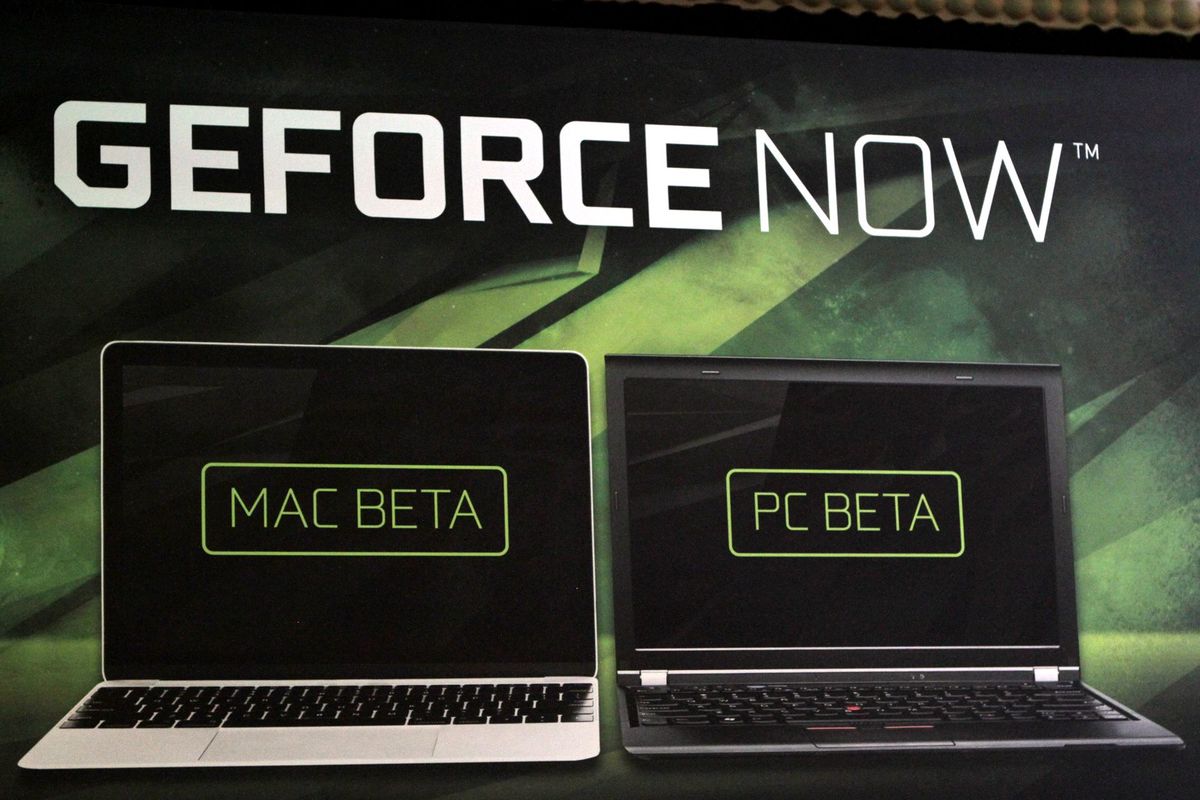
If you have a Bluetooth control, the Shield is even a decent gaming system with Nvidia's GeForce Now streaming service, PC-to-Shield streaming, and a respectable selection of games to download. NVIDIA Officially Launches Game Streaming Service GeForce Now The video gaming app can turn almost any device into a high-powered platform for just a few dollars per month.
GTC — NVIDIA today announced the NVIDIA Maxine platform, which provides developers with a cloud-based suite of GPU-accelerated AI video conferencing software to enhance streaming video — the internet's No. 1 source of traffic.
NVIDIA Maxine is a cloud-native streaming video AI platform that makes it possible for service providers to bring new AI-powered capabilities to the more than 30 million web meetings estimated to take place every day. Video conference service providers running the platform on NVIDIA GPUs in the cloud can offer users new AI effects -- including gaze correction, super-resolution, noise cancellation, face relighting and more.
Because the data is processed in the cloud rather than on local devices, end users can enjoy the new features without any specialized hardware.
'Video conferencing is now a part of everyday life, helping millions of people work, learn and play, and even see the doctor,' said Ian Buck, vice president and general manager of Accelerated Computing at NVIDIA. 'NVIDIA Maxine integrates our most advanced video, audio and conversational AI capabilities to bring breakthrough efficiency and new capabilities to the platforms that are keeping us all connected.'
Breakthrough AI Efficiency Slashes Bandwidth to Boost Call Quality
The NVIDIA Maxine platform dramatically reduces how much bandwidth is required for video calls. Instead of streaming the entire screen of pixels, the AI software analyzes the key facial points of each person on a call and then intelligently re-animates the face in the video on the other side. This makes it possible to stream video with far less data flowing back and forth across the internet.
Using this new AI-based video compression technology running on NVIDIA GPUs, developers can reduce video bandwidth consumption down to one-tenth of the requirements of the H.264 streaming video compression standard. This cuts costs for providers and delivers a smoother video conferencing experience for end users, who can enjoy more AI-powered services while streaming less data on their computers, tablets and phones.
AI Features Improve Video Conferencing Experiences
New breakthroughs by NVIDIA researchers that will be included in Maxine make video conferencing feel more like face-to-face conversation. Video conference service providers will be able to take advantage of NVIDIA research in GANs, or generative adversarial networks, to offer a variety of new features.
For example, face alignment enables faces to be automatically adjusted so that people appear to be facing each other during a call, while gaze correction helps simulate eye contact, even if the camera isn't aligned with the user's screen. With video conferencing growing by 10x since the beginning of the year, these features help people stay engaged in the conversation rather than looking at their camera.
Developers can also add features that allow call participants to choose their own animated avatars with realistic animation automatically driven by their voice and emotional tone in real time. An auto frame option allows the video feed to follow the speaker even if they move away from the screen.
Using conversational AI features powered by the NVIDIA Jarvis SDK, developers can integrate virtual assistants that use state-of-the-art AI language models for speech recognition, language understanding and speech generation. The virtual assistants can take notes, set action items and answer questions in human-like voices. Additional conversational AI services such as translations, closed captioning and transcriptions help ensure participants can understand what is being discussed on the call.
Cloud-Native Architecture Delivers Savings and AI at Scale
Demand for video conferencing at any given time can be hard to predict, with hundreds or even thousands of users potentially trying to join the same call. NVIDIA Maxine takes advantage of AI microservices running in Kubernetes container clusters on NVIDIA GPUs to help developers scale their services according to real-time demands. Battle royale official site. Users can run multiple AI features simultaneously while remaining well within application latency requirements.
Video conference service providers can use Maxine to deliver leading AI capabilities to hundreds of thousands of users by running AI inference workloads on NVIDIA GPUs in the cloud. The modular design of the Maxine platform enables developers to easily select AI capabilities to integrate into their video conferencing solutions.
All-Star Suite of NVIDIA AI Developer Tools
The Maxine platform integrates technology from several NVIDIA AI SDKs and APIs. In addition to NVIDIA Jarvis, the Maxine platform leverages the NVIDIA DeepStream high-throughput audio and video streaming SDK and the NVIDIA TensorRT™ SDK for high-performance deep learning inference.
The AI audio, video and natural language capabilities provided in the NVIDIA SDKs used in the Maxine platform were developed through hundreds of thousands of training hours on NVIDIA DGX™ systems, the world's leading platform for training, inference and data science workloads.
Availability
Computer vision AI developers, software partners, startups and computer manufacturers creating audio and video apps and services can apply for early access to the NVIDIA Maxine platform.
Additional Resources
Video: NVIDIA Maxine Streaming Video AI SDK demo
Video: NVIDIA Research AI Video Compression demo
Blog: AI Can See Clearly Now: GANs Take the Jitters Out of Video Calls
Blog: NVIDIA Jarvis and Merlin Enter Open Beta, Enabling Conversational AI and Democratizing Recommenders
Blog: What's a Generative Adversarial Network?
AI-powered features for broadcasting, content creation and video conferencing
NVIDIA Broadcast Engine is a suite of SDKs that aim to provide AI-powered features for broadcasting, content creation and video conferencing. Developers can provide their customers with advanced AI effects such as noise removal, virtual background, or face tracking. These features are possible in real-time - without special cameras, microphones or other hardware - thanks to the power of NVIDIA RTX GPUs and their dedicated Tensor Cores.
This page contains information for developers. If you are an end user, you can check out the NVIDIA Broadcast app or the Broadcast Engine Redistributables for applications that have integrated these SDKs.
Noise-free audio is crucial when hosting a live stream or podcast, or for video or audio conferencing. NVIDIA's Audio Effects SDK uses AI to remove distracting background noise from your incoming and/or outgoing audio feeds, making conversation easier to understand.
Apply incredible AI effects over video, without requiring special cameras or other hardware.
Virtual Background delivers real-time background removal of a webcam feed, so only your face and body show up on your livestream. It uses AI to separate the talent from the background without the hassle of a physical greenscreen.
Video Super Resolution enhances video quality with AI. It can upscale content up to 4K in real time and remove encoding artifacts. The SDK offers a high performance and a high quality mode.
Enables real-time 3D tracking of a person's face using a standard web camera. Developers can create fun, engaging augmented reality effects, such as overlaying 3D content on your face, allowing you to control 3D characters, or adding immersive effects that make you look like you are in the game. The SDK features include:
AI-based technology that detects human faces in images and video feeds. It determines the location of the face and specifies the size using a bounding box.
AI-based technology that identifies the facial features and facial contour of a person, including face shape, lips, eyes, and eyelids, using 126 key points. Accelerated on tensor cores, it tracks 3 degrees of freedom head pose and facial deformation due to head movement and expressions.
GPU-accelerated optimization using a 3D morphable model to create a 3D mesh representation of a human face with up to 3000 vertices and 6 degrees of freedom head pose in real-time.
Unlock the full potential of streaming apps with dedicated hardware encoding and decoding, reducing the FPS impact of streaming by up to 50%. With RTX GPUs, NVENC delivers up to 15% better efficiency for H.264 encoding, and 25% for HEVC encoding compared to prior generations.
'NVIDIA Broadcast Engine allows developers to tap into NVIDIA's RTX-powered AI effects and the XSplit team has been working closely with NVIDIA to get these enhancements into the hands of our users. In particular, we've integrated their Noise Removal technology from their Audio Effects SDK, enabling broadcasters to consistently produce a clean and noise-free stream for their viewers. We are committed to continuously bring value to our customers and look forward to future collaborations with NVIDIA in their innovations.' - Miguel Malvar Molina - Director of Developer Relations, XSplit.
'Our mission is to make IP video easy to use and fun for anyone to make a great show,' said Dr. Andrew Cross, head of Research and Development for the Vizrt Group and NDI®. 'Offering full NVIDIA GPU accelerated support for NDI allows gamers to use applications like OBS Studio to share gaming experiences with higher quality, performance, and frame-rates than ever previously possible.'
'The speed and quality of the new (and easy-to-integrate!) AR SDK face tracker is incredible. Through the use of dedicated Tensor Cores, Notch users have access to sub-frame accurate face tracking with high-resolution cameras in a live environment. We're excited to see what this, as well as other NVIDIA Broadcast features, will bring to the live show and virtual production environment.' - Matt Swoboda, Founder and Director at Notch.


/image%2F6305916%2F20210218%2Fob_f898d4_parallels-access-catalina.png)
/image%2F6305916%2F20210218%2Fob_f19064_family-feud-live-answers-and-questions.jpeg)
/image%2F6305916%2F20210218%2Fob_331eed_paragon-ntfs-crack-2018.jpeg)
/image%2F6305916%2F20210218%2Fob_8fca1a_human-model-maker.jpeg)